Saturday, May 15, 2010

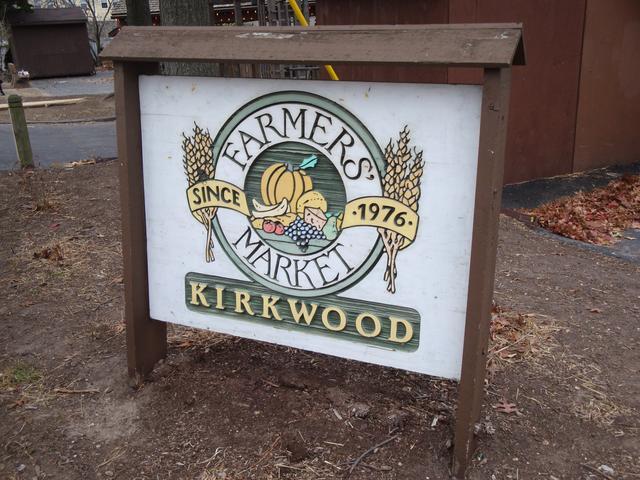
The Forest Grove Farmers' Market offers a food stamp program for the second year in a row. Here's a look at how that helps both the farmers, and the people with low incomes who might otherwise go without fresh organic produce.                                                     


Photo by Steve Bickel
I might have mentioned that I worked at the local farmer's market a few summers ago. My job, among other things. was to process food stamp payments for the entire market. It was the first year that the market had accepted food stamps, and it was a big hit.


The program has grown since then, and I'm glad to see that that's the case. Why?

I'm sure that in one of my recent tirades I've mentioned that corn is in everything. It's used as a binder, a thickener, a sweetener, a preservative: you name it. It's in everything precisely because the government subsidizes the growing of corn. This means it costs almost nothing to use corn ingredients in one's products. People with limited incomes can stretch their dollar further by buying these products, and consequently they have the worst diets in the country. Meanwhile, these buying habits just reinforce the inclusion of corn-based products in virtual everything.

Food stamps at farmer's markets help the good guys win.

First, farmers can sell produce for cheaper while making more money. Farmers lose a lot of potential income when they sell to grocery stores because those grocery stores have to factor in overhead when calculating their buying price. Selling directly to the consumer saves everyone money.

Second, people with limited incomes are able to buy healthy foods which they would often pass up in grocery stores on account of price. Because the money is going from the food stamp program to the local farmers, it's helping to stimulate the local economy.

Third, because this food is local, and often organic, it's reducing the farm-to-fork miles contributed by one of the most offending demographics. Unfortunately, this demographic has very little control themselves, and are jerked around by what they're able to afford. Programs like this help them make healthy choices for themselves, for the planet, and for the local economy.

The unfortunate thing is that it is cost prohibitive for most farmer's markets to start a food stamp program. The necessary equipment costs thousands of dollars. Check to see if your local farmer's market has a food stamp program, and if not, you can help by looking into getting grants to start one, or by organizing a fundraiser to come up with the necessary funds.

On top of the benefits to this underserved demographic, however, is the fact that the same equipment will allow the farmer's market to collect credit and debit card payments as well. The ease of buying that this has created for our market has meant better profits for our farmers, and a well-fed community.

Comments

Wednesday, May 12, 2010

Since this blog is about me writing as much as it is anything environmental--that just happens to be what I hone my writing on--I thought I'd share news about my world of academia and what's been keeping me away from the blog.         


From my advisor:

"Some lines in here are publishable, Matt. You're smart, have a good sense for telling the story, and aren't afraid to confront the monster. All the makings of a true memoirist."

That might not seem like much unless you're a writer. When you're a writer, you have to learn to compensate for the fact that your mentors will ration compliments to A) keep them from going to your head and turning you into a monster, and B) make sure you never settle for second best. As writers, we have to pretend that those compliments aren't actually 500,000% better than they seem for those very same reasons. In a sense, a good chunk of writing is learning to lie to yourself until your lies are true... or something. I'm actually just caffeinated and exhausted, so none of this really makes sense. If I'm lucky I'll manage to sound wisely ambiguous, so when you don't get it you'll think you just haven't thought about it hard enough.

Anyways...

Photo by Josep Ma. Rosell 
I don't think I've shared with you, my readers, what my non-environmental work is. This project in particular is a memoir, if you hadn't gathered from the quote. I've been doing research on touch in America, and especially the tendency for Americans to conflate touch and affection with sexuality. A kiss can't just be a kiss, it has to signify romantic/sexual interest. Compared to other industrialized nations, in this regard, the U.S. seems to be trailing (just like we are in so many other areas.) That doesn't mean there isn't a problem at all in other countries, but the research I've done suggests that we're the worst, and because I'm U.S.American, I can contribute my personal experiences to the discussion of this research. So, that's what my work does. It blends my personal experiences and the experiences of people I know with the research I've been doing in order to appeal both to people who want a compelling story, but also those that want objective facts and a scientific basis.

One piece of interesting research involved a survey of teenage mothers. Most of those teens admitted that they didn't want sex, but rather they wanted love and affection, to feel cared for and desired. This deficit of love and affection, the study suggested, stems from the fact that American parents are made to feel incestuous, or like pedophiles, if they try to be affectionate with their children once they reach puberty and mature sexually. It becomes inappropriate for adults to touch their children in more than just a simple hug or the like. Sex and relationships are a way for teens to fill that void.

And I said that this is completely unrelated to my environmental work, but that's not entirely true. I'm a systems thinker, and it's my "job" to work out how seemingly disparate things go together. It seems self-evident to me that how we interact with others shapes and defines out quality of life and level of happiness. Happy people make better decisions. People with strong relationships tend to rely on material things for their utility rather than as a replacement for human affection, and so are less wasteful (taking a public bus rather than a Ferrari.). Even as a kid growing up, my family had stronger ties with my neighbors than I do now, or than any people that I know have with their own neighbors. As certain resources become more scarce, it will be easy to compete with each other, trying to get more than our fair share, instead of cooperating with each other to preserve that resource. We're a splintered society, and as much as it might be ironic for a blogger to say so, technologies like the internet are part of that problem (though they can just as easily be part of the solution.) We can reach out to someone we barely know halfway across the world, but we never even say "hi" to our neighbors. What if that simple greeting is all it took to make the world a better place?

That, and a good night's sleep... which I hope to get right now. And then I face my last day of classes for the foreseeable future...

Wish me luck, and I'll do the same for you in all of  your endeavors.

Comments

Sunday, May 09, 2010

The three R's come in order of importance: Reduce, Reuse, Recycle. That said, one can see the important role that bartering can play in keeping things out of landfills. Baarter.com makes it easy.          


Being a big fan of bartering myself (every piece of furniture I have was free or traded for) I was excited to stumble across Baarter.com. I haven't made trades through the site yet, but I'm glad the emphasis is on bartering rather than buying and selling. If you have something you want to get rid of, or if you have something you're trying to find, I suggest you check it out.

Of course, the old standbys are Craigslist and Freecycle. The problem with Craigslist is the emphasis is on buying and selling (not that there's anything wrong with that, it just isn't as conducive to bartering). And while it's awesome to nab something free from Freecycle, they don't allow buying, selling, or trading if that's what interests you, and there are quite a few people on there just begging for stuff. I have had considerable success with both of them, both in finding stuff and in finding new homes for stuff I don't need anymore, but I'm glad to add Baarter to my list of resources.

If you have any other good sites for bartering put them in the comments.

Comments

Wednesday, May 05, 2010

Bidets are commonplace in other parts of the world, but here in the U.S. they're, well, foreign. The reality is that these devices offer a lot of environmental advantages.                                             


Seventh Generation Bathroom Tissue, 2-Ply Sheets, 500-Sheet Rolls (Pack of 48) [Amazon Frustration-Free Packaging]


I hate toilet paper. This hatred isn't rooted in any environmental concern, although I know that there are environmental reasons for hating it. No, this hatred stems from the fact that I'm a clean-freak fighting a losing battle: what will I clean today given the limited hours in a day? My ass would be one of them (if you'll excuse my English... no, really... "ass" comes from "arse," which in turn comes the Middle English "ars," and then from the Old English "ears." "Ass," as it refers to a donkey, stems from the Old English "assa," which ultimately comes from the Latin "asinus." See how I take a moment that could otherwise be considered profane and make it educational? But I digress...). As gross as it is to talk about--bear with me here--I think we all secretly hate the smearing action we're perpetuating on our backsides. How could that be considered making us clean? And how much paper do we waste in wiping for perfection?

So yes, my major concerns are and have been selfish. But, being who I am, I latched onto that last question: How much paper are we wasting?

That's a complicated question. I mean, the simple answer is that we're using a lot. But what does it mean to waste paper? It breaks down fairly readily compared to plastics and metals, so when I ask "How much paper are we wasting?" the implied question is "What impact is my toilet paper usage having on the environment?"

Let's take a step back though and think about how much paper we're actually using. I haven't been counting, but I can make some rough estimates that I think will put us in the ballpark. Let's assume a person averages about 20 sheets (that is, 20 squares) of toilet paper per bowel movement (I imagine the number should actually be a bit higher, but let's be conservative, shall we?) Then, let's assume that Americans are healthy (am I funny, or what?) and their exceptional diet and exercise routines have their digestive systems running optimally, and thus they have about 3 bowel movements a day, or once per each of the standard American meals (this is a liberal estimate, but together with the conservative estimate about TP use, I think it balances out pretty well). That means 60 sheets per day. We (my roommate and I) use Seventh Generation toilet paper, and it has 500 sheets per roll. With our (that is to say, my) estimates, that means a person is going to go through a roll every 8.33 days, or, roughly one roll a week. I have a roommate, obviously, so that means roughly 2 rolls a week for our entire household. That seems to mesh pretty well with how often I seem to change the roll, so the estimates seem pretty good. In one review I read about a 4 or 5 person household where they claimed to be going through half a roll a day, which also fits with my calculations. Households in America, then, are probably using somewhere between 2 and 4 rolls of TP a week, or 104 and 208 rolls a year. I can't make any specific environmental claims based on these numbers, but I can point out a thing or two about cost: at these rates, assuming they are typical for an American household, those same American households are paying between between $108 and $217 each year on toilet paper if they're trying to be environmentally friendly and buying a 100% recycled paper like the Seventh Generation brand (and if you're using toilet paper, and you're reading this, one could assume that that's very likely).

Luxe Bidet MB320 Double Nozzle Fresh and Warm Water Spray Bidet Toilet Seat AttachmentDo you want to know what costs less than toilet paper? A bidet. Or, I should say, a bidet attachment, since in many parts of Europe and other locations around the world, a bidet is actually separate from the toilet. But because most American bathrooms don't come with bidets (spell check isn't yelling at me, but I have a suspicion that that isn't the proper way to pluralize "bidet"), there have sprung up several manufacturers that have created bidet attachments that install right on your toilet. There are lots of options, but even one of the most expensive and highest rated models on Amazon comes in at only $99, which means it's still cheaper than the annual toilet paper costs for a two-person household (given all of the aforementioned assumptions). But I'm a pretty simple person and I don't need all of the bells and whistles that come with the more expensive models. The model I'm considering has also received rave reviews, but without all of those bells and whistles it comes in at only $41.50. At this price, even if I was living alone, recycled toilet paper would cost me more.

But what about the environmental costs? I already told you that I can't give you any specific numbers because, as you might imagine, most companies don't advertise how much they waste. I'm not about to fabricate numbers in order to scare you into believing what I do. In fact, if you believe otherwise and have some information I don't, please set me straight. What I can do, however, is describe the paper manufacturing process in general terms, and we'll see if that's sufficient to paint a picture of the kind of waste that occurs.

Have you ever made paper before? I have. You can make paper from virgin plant materials, and you probably would if you took a college level paper making class, but all of the paper I've made has been from reclaimed paper, thus, all of the paper I've made has been recycled just like Seventh Generation toilet paper. Seventh Generation claims that they're saving trees because they're using 100% recycled materials. From what I've gathered, that isn't entirely accurate. Most of the toilet paper that is made from virgin wood is actually made from saw dust, a waste product of the lumber industry. It is possible that were lumber usage to decline trees would be harvested solely for making toilet paper, but that doesn't seem to be the case at the moment. No, the real environmental benefits of using Seventh Generation paper are that it requires less water and energy to manufacture products from recycled materials versus virgin materials: all of the initial processing that the wood goes through has already been done.

But creating recycled paper still requires water, and in a factory setting, it's also going to require electricity. To make new paper out of old paper you shred the paper up and soak it in water to make a pulp (I don't know if a blender was utilized the first time I made paper, but it certainly has since then). A bin contains your paper pulp and a fair amount of water, and a fine screen is dipped into the water to gather up some of the paper pulp and allow the water to drain. Excess water is pressed out and the sheet is allowed to dry. Because you're using used paper, most of it probably has pen, pencil, or printer ink, and even the paper itself might vary in color. All of these dyes and inks end up in your paper pulp, so your paper will inevitably end up a nasty gray color. This is fine for a DIYer--the paper is perfectly usable, and the gray color isn't all that unattractive once you get used to it. But paper you buy at a store is a nice, pristine white or off-white color. To achieve this, paper manufacturers have to bleach the paper. Generally, they use the obvious: chlorine bleach. Some companies try to distance themselves from such toxic chemicals and sport labels that say things like "whitened without chlorine," etc. I believe that the most common alternative to chlorine is hydrogen peroxide, but I'm not familiar with how the process works (extra credit to whoever can tell me).

So, now there is chlorine or hydrogen peroxide (or some other chemical) in the waste water on top of all of the inks, graphite, and dyes. Add to this that at least some papers (mostly artsy papers, to my knowledge) also add a glue to the paper to help hold it together. I'm taking a printmaking course right now, and you soak your paper before you print on it. Because some of that glue leaches out of the paper, the water tends to get slimy and nasty after a while--you definitely know the glue is in the paper. So not only is a lot of water being used to produce these paper products, but a lot of other chemicals are thrown out with that water... and that's even with recycled paper. Also add in all of the fuel used to transport the finish product, and then the fuel used to go to the store and buy these products. Even the most environmentally responsible companies, doing the best they can to balance consumer demand with environmental responsibility, are still wasting a lot of resources. That's just the nature of the beast plain and simple.

It does seem counter-intuitive to think that using water would save water, but I do have an edge because I have a sense of how many gallons are wasted to make just a few sheets of paper. And I'm not the only one who has come to this conclusion. I found an article on the Mother Nature Network that tackles this same problem. "Use a bidet" seems to be the consensus. The amount of water used in manufacturing toilet paper outweighs the amount that is used in operating a bidet, and the bidet also avoids the use of other manufacturing chemicals. And if I can reduce my environmental impact and feel cleaner, it seems like a winner to me.

The Self-Sufficient Life and How to Live ItIt does raise a question about water use in the bathroom, however. In a roundabout way a bidet saves water, but it is still using water. And in a traditional bathroom setup you're flushing a lot of water needlessly down the toilet. As someone who rents a small apartment my options are limited, so a bidet attachment is one of the best compromises I can make. But, if you've been reading for a while, or you've gone back through the archives, you'll know that when I first started this blog I wrote a piece on compost toilets. Compost toilets are a flushless, waterless toilet system for hygienically processing human waste for use as an organic fertilizer (if you have no idea why you would want to do that, definitely read my old post). You can make your own compost toilet, and John Seymour's The Self-Sufficient Life and How to Live It provides plans for doing so, but you can also buy a commercial model. Well, a commenter over at TreeHugger.com suggested combining compost toilets with a bidet (since most people with compost toilets are still using toilet paper to wipe). I vote yes on this idea. Unless you're wiping with leaves, this is the best you can do. And because you're using no water to flush, and significantly less water with a bidet than with toilet paper, it's all kinds of win. Granted, if you want to use leaves, I would certainly encourage it... I'm just not at that point in my environmental evolution yet. Baby steps... baby steps.

Okay. Now back to my torture session. I shouldn't have even taken a break to write this, but I'm having withdrawals. Two more weeks and I'll be free of school, and then barring other time sinks, I'll be able to write more often for your reading pleasure. Until then, if you hear from me, you likely shouldn't.

Comments

Friday, April 23, 2010

It's been a mad dash to get my thesis completed. Monday my advisor told me that I needed to rewrite 95% of it. Needless to say, I haven't been in class all week.                                      


Photo by Mutasim Billah
My presentation is Wednesday morning, and then I have a little bit of time to put on finishing touches and submit my final manuscript. There are definitely plenty of things I want to write to all of you about, but it's going to be a few more weeks at least. Wish me luck.

Comments

Friday, April 09, 2010

There's been quite a bit of hype for a few years about corn-based biodegradable plastics. The simple solution to our throw-away culture was to create better things to throw away... or so they say. But the problems with these corn-based plastics run from the obvious to the not-so-obvious.


Photo by Dan Klimke
For starters, they're made from corn. In many instances, it's GMO corn. Even when it's not, corn is the most chemical hungry crop we grow: fertilizer, pesticides, herbicides, you name it. So is it really better than traditional plastic? Maybe. Corn-based plastic supposedly uses less than half the energy that petroleum-based plastics use during production. According to an article by Elizabeth Royte in Smithsonian Magazine, corn-based PLA bags use 65% less energy during production, and emit 68% fewer greenhouse gases than their petroleum-based counterparts. Does that offset all of the chemicals that go into producing the corn as compared to drilling and processing oil? I haven't seen anything conclusive, but oil isn't going to be an option for much longer anyways. If we're going to continue to use plastics (which is another discussion altogether), we have to figure out something, whether corn is that something or not.

My bigger concern is with claims of biodegradability. Companies use this "biodegradable" packaging and present themselves as our saviors. Most consumers, not knowing any better, think this is the greatest thing that has ever happened in the history of mankind. But the fact of the matter is that PLA requires high-temp municipal and commercial composting facilities. These don't exist in most places, and a home compost bin just won't do. Home compost bins are aerobic, and they just don't get hot enough to break down these pseudo-plastics.

There are some exceptions, of course. There are a few producers of bioplastics that claim their products are compostable in a home composting bin. However, of these relatively few manufacturers, I've only found one that has actually been certified as home-compostable. That is Mater-Bi. Mater-Bi was tested by Which?, a UK consumer organization, and found that Mater-Bi composted under normal home composting conditions. The Village Bakery has been using Mater-Bi to package their organic breads since at least early 2008. We could use more companies with that kind of initiative.

Of course, the better solution would be to use no plastic at all. Buy from farmers markets where you can avoid packaging altogether, or grow your own food. Ideally, I wouldn't have a trash bin. I wouldn't even have a recycling bin. I'd only have what I could personally put into my body, compost, or reuse. The prevalence of urban sprawl and the dominance of big agriculture remain major obstacles to this goal. In the evolution to that ideal however, biodegradable plastics have a role to play. Perhaps we start with home-compostable corn-based plastics like Mater-Bi. From there we shift from corn to less chemical-dependent crops. As we lessen our dependence on corn we can diversify the crops being grown on those lands, and perhaps provide all of our food locally. Once foods are grown locally, our excuses for packaging them will disappear.

It's a dream, but a dream worth having.

Comments

Saturday, April 03, 2010

A round-up of environmental documentaries that are available for immediate viewing via Netflix's streaming video service. See which one's made the cut--and which ones didn't.                                          


This has been my first full week since spring break--if you could call it a break. But, while I was on break, I decided to test drive a trial of Netflix. The awesome thing about Netflix is that you can stream a large number of movies directly to your computer, and with a bit of know-how, to your TV. That means over the break I was able to watch a great number of documentaries without fiddling with DVDs or anything. Here's what I watched and what I thought of them:

The Botany of Desire
The Botany of Desire - Michael Pollan's book has been transformed into a film by PBS. The film follows the domestication of four plants: apples, tulips, marijuana, and potatoes. But have we domesticated them, or have they domesticated us? And while it certainly behooves a plant to be attractive to us, has its attraction ultimately caused its genetic weakness and susceptibility to disease? Especially with apples and potatoes, consumers and producers are looking for specific traits, and as we find them, we end up eating a very limited variety of these foods. As a result, genetic variation declines, and the plants become more susceptible to pests. And perhaps our variety in diet has declined too much as a result of our selecting for certain traits. This film has beautiful cinematography on top of having compelling premises that interesting conclusions. Definitely a must-see.

Food, Inc.Food, Inc. - From the man that brought us Fast Food Nation, comes a film that takes us on a tour of the food industry. When we walk into a supermarket, we're met with an illusion of diversity. The truth is that a limited number of companies, like Tyson, own the majority of the food producing operations in the U.S. Not only are we being swindled on variety because of what grows fastest, grows biggest, or stores longest, but the farmer's producing our food have little say in what or how they're growing. Companies like Tyson finance chicken growing operations and tell farmers when and how to do things. If farmers don't play along, they go out of business, often being in debt hundreds of thousands of dollars or more. Much the same is true with potatoes. McDonald's is the largest consumer of potatoes in the world. What kind of potatoes does McDonald's want? Russets. And if a farmer isn't selling to McDonald's it likely isn't staying in business. And then there's the business of corn. I knew corn was in a lot of things, but I wasn't terribly concerned until I saw this film. High fructose corn syrup, dextrin, maltodextrin, dextrose, fructose, sorbitol, starch, monoglycerides, diglycerides, monosodium glutamate, vegetable oil, vegetable broth. It's everywhere. Not only do farmer's struggle to meet the demands of companies that own patents on GMO corn, but they're also pressured to grow corn because of outrageous government subsidies on corn. Our diet has become almost completely corn, and without our knowledge or consent. Want to know how far the rabbit hole goes? Watch this film.

King Corn (Standard Packaging)King Corn - On the subject of corn, these two college friends and filmmakers decide to get back to their Iowa roots and grow an acre to corn for a year. When it's done, they watch where it goes. Before they even start growing, they're paid by the government just for claiming that they intend to grow. They go through the process of spraying their acre with chemical fertilizers and pesticides, and at the end of the growing season they find out that they've actually lost money on their crop. But not to fear, they still have a lot more money to collect from the government just for growing corn. And that's because corn ends up in everything. At the very beginning of the film, the two filmmakers have an analysis done on their hair that shows that their diet is predominately corn. They find out why when they start following their crop. The truth is, the corn they're growing isn't even edible without being processed into high fructose corn syrup, MSG, and other filler ingredients. What's left over goes to feed cattle. The corn-based diet upsets acid levels in the cow's digestive tract, and if they weren't taken to slaughter as soon as they are, the diet itself would kill them. The hamburgers that the filmmakers eat are predominately corn, the ketchup and their burger and fries is predominately corn syrup, and their fries are cooked in corn oil. It's no wonder they analysis was showing so much corn in their diets.

Killer at LargeKiller at Large - This film dives into America's obesity epidemic and tries to uncover why its happening. It shows large food companies lobbying for their rights to target advertisements at children, and then asking parents why they weren't more attentive to what their children were eating. It shows the unprecedented amount of corn in our diets and how that's contributing to early onset diabetes. And it shows how teachers were shut down when they tried to get sugar-filled vending machines out of the schools. I appreciated that this film approached the food industry from the angle of its effects on us. It struck home. Even after the other films railed on corn, this one really sealed the deal because it made the link between our unknown obsession with corn and the effects it's having on our health. If you want less enviro and more human-oriented thinking on the modern food system, this is the one to see.

No Impact ManNo Impact Man - A lone man takes his family off the grid over the course of a year. What's the catch? They live in New York City. They ditch cars for human-powered bikes and scooters and eat only local food (even visiting the farms they're buying from). He starts composting in his apartment and washing laundry by hand. At the 6 month mark, they turn of the electricity, and for the remainder of the year they do everything by candlelight. It's a long year, and they take at lot of flack, but at the end of the year they've learned something about what they can and cannot go without. Of all of these films, this is the one that most inspired me to get out and do something (or stay in and do something, as the case may be). Even something as simple as using candles at night instead of electric lights can be the big difference. And this year I think I'll actually be participating in a CSA owned by a farmer I know through my work at B St. If you want a really well-rounded film that will give you lots of ideas about how you can lessen your impact on the planet, this is the one.

Go FurtherGo Further - This film was worthless. Don't see it. Woody Harrelson and his band of pot-smoking jokers take off down the west coast in a bus and Woody gives speeches on sustainability at colleges along the way. The only part of those speeches you get to hear is a poorly written poem. The rest of it is just an excuse for them to smoke and have sex. This film fails to be educational, and it fails to be entertaining. It just fails. If there were no other documentaries out there on the subject of sustainability, then it might have some merit for starting a discussion. Instead, it says much less than dozens of other films have already said, and it says it much less intelligently. This is the only film I watched that I really can't recommend.

There you have it: my thoughts on some of the eco-documentaries I was able to watch over break. There are plenty more, but that's what I got around to. You can order any of these films from the links provided. Alternatively, you can try to find them at your local library. And, if you want to try out Netflix for yourself and stream all of these movies for free, click here for your two week trial.

Comments

Saturday, March 27, 2010

Hey! I mentioned Rosanna and the MiniLivestock blog back when I did my series on entomophagy (that's bug-eating for the uninitiated). Seems Rosanna came by to read what I had to say on the subject...                           


Hey! I mentioned Rosanna and the MiniLivestock blog back when I did my series on entomophagy (that's bug-eating for the uninitiated). Seems Rosanna came by to read what I had to say on the subject and wrote up a short piece about my blog. The MiniLivestock site has moved since I mentioned it last, so go check out MiniLivestock.org for info on bugs, eating bugs, and recipes for the bugs you eat. It's a great resource for this interesting subject.

Comments

Want to know how to compost indoors? Here's are the details for the composter I made for my kitchen out of a couple of totes. Best of all, it'll only set you back $10.                                                    


AUTHOR'S NOTE: This is part 2 of 2 in a series of posts on indoor composting. Click here for part 1.


I previously posted on the specific challenges of composting indoors, and from that, I decided to make an experiment out of composting indoors.

Well, I've built my composting bin and it's been going for about a week now.

Here's how:


Find a couple of matching plastic totes. These are 18 gallon bins. That is a bit excessive, but they were on sale for $5 each, which made them cheaper than the 10 gallon bins. If you have old bins, or can find used bins, choose those over buying bins... but remember that they need to have lids.


Drill holes in the bottom of both totes. The holes should be a quarter inch to allow the eventual migration of worms from one bin to the other (did I mention there were worms involved?) My dremel only had bits up to 1/8" so I improvise and used a grinding stone to widen out the holes.


The next step was to repeat the process, adding 1/16" holes around the top of the bins and in one of the lids.


It's probably hard to see since 1/16" holes aren't that big, but there are two rows of holes, about an inch apart, all the way around the bin.


The same with the lid. Only one of the lids though! We'll be using the other one for something else.


Soak enough shredded newspaper and scrap paper to fill the bottom 3-4 inches of the bin. Wring it out so that it's moist but not dripping. Add some vegetable matter to this. Make sure you bury the vegetable matter to keep fruit flies out of it. Let this set for a week or so before you add worms so the food can start breaking down.


Get your worms. If you have red wigglers growing wild in your area, you could just dig some up. I don't, however. Don't use night crawlers. Red wigglers are surface feeding worms that do well in big groups. Night crawlers feed deeper in the soil and are loners. They're not a good choice for a composting bin. 


I ordered my worms from woodwormfarms.com. It wasn't the best experience in the world (they sent the wrong shipping confirmation, I had no idea when the worms were supposed to be arriving, worms looked half-dead when I got them). But, this was one of the few places I found where I could place an order for just a 1/4 pound of worms. It only cost $11 plus shipping, and I was looking to start this bin as cheaply as possible. And they all ended up living, so despite the less-than-stellar service, I can't complain.


Add them to the bin! Along with a cupful of dirt, of course. The dirt helps them grind up food, and contains microorganisms to break down food scraps.

Somehow I neglected to take a picture of the completed bin all set up. I'll have to do that at some point. Here's what you do:

Set the lid without the holes on the floor. Rescue four or five paper cups and place them upside down on the lid (I used a glue stick to hold them in place). Set the bin with the bedding material and worms on the cups. Place a piece of cardboard over the bedding. Place the second bin inside the first. And then put the lid with holes on top of the second bin.

When the first bin is full, add moist bedding and food to the second bin and remove the cardboard from the first. This will allow the worms to move into the second bin and start the process all over. Once the worms have all moved into the second bin you can empty out your delicious compost and use it on your plants.

A couple of important things: keep your food scraps covered or you will end up with a fruit fly infestation. Guaranteed. Also, don't feed your worms more than they can eat or it will start to smell. Red wigglers can eat half their weight in a day. That means my small 1/4 pound of worms can eat about a pound a week.

As things start to break down, I'll be watching for odors. If things get out of hand, I'll test the carbon filter theory.


AUTHOR'S NOTE: This is part 2 of 2 in a series of posts on indoor composting. Click here for part 1.

Comments

Friday, March 26, 2010

A continuing discussion with a fellow blogger on the pros and cons of going nude for Mother Nature. What are some of the challenges? What are some of the benefits?                                                                         


AUTHOR'S NOTE: This is part 2 of 2 in a series of posts on sustainability through nudism. Click here for part 1.

Photo by SantaRosa OLD SKOOL

I was glad to see someone taking me up on the topic of going naked to save conserve energy and resources. It was Michelle, of course, whom I mentioned in my previous post on illegal yards. I already responded to Michelle's post over at The Clueless Gardeners blog, but I thought I'd recap and elaborate here for my readers. This discussion actually has a lot of parallels to the illegal yard discussion.

Michelle says:
I can't get on board with going entirely without. Partially, this is because I get cold easily, and I sunburn easily. There is only a narrow window of conditions in which I personally would be physically comfortable going naked.
I agree with this sentiment whole-heartedly. I definitely stay bundled up in the winter. It would be impractical, and sometimes dangerous, to not wear clothes. If you're in Alaska, please wear clothes to stay warm. If you're in the Sahara, please wear clothes to protect you from the sun.

Those are extremes, and it could certainly be considerably warmer or cooler and still be uncomfortable. But what about those places or those days when the weather is agreeable? Not too hot, not too cold. Certainly then we could go naked.

And what about all of the time we're spending indoors? Now, I'm not suggesting that we turn the heat up just so we can go around naked. That's counter-productive. The point, after all, was to go nude to conserve energy. But, that said, it is pretty easy to regulate temperature indoors without using any electricity. Just use passive heating and cooling techniques, such as passive solar. There are lots of green building techniques designed to keep air temperatures comfortable without expending energy by utilizing shade, thermal mass, insulation, air circulation, and more.

So, with thoughtfully designed buildings, we should be able to go nude indoors nearly 100% of the time.

Michelle's other big objection is...
sanitation. We females have moist nether regions. Sitting naked on a chair that has been sat on by another naked woman is like wearing another woman's underwear. Eww eww eww eww eww. Not hygienic!
Simple solution: put down a towel. This is actually a requirement at every nudist resort I've read about, precisely because they're hygiene-minded. Really, this is a side-effect of an industrial society that we can't avoid. In nature, the things we would have sat on wouldn't have been so permanent. They would have been bombarded by sun and rain and animals, and sitting in the same place more than once would have been highly unlikely. But, our chairs are made of wood and plastic and other materials that will often outlive us. Not only do they last a long time, but they're also porous and hold bacteria and other nasties. (If you've ever looked into having wooden earrings, as I have, then you know that it's recommended that you wear stainless steel until your ear is completely healed up, as wood is porous and can hold bacteria that will cause your ears to get infected). Living communally is a recipe for spreading disease, so putting down a towel where you're sitting would be a necessary step. (This is also related to my disgust with bathrooms--in our pre-civilized state, there's not way you would have found so many humans going to the bathroom in the exact same spot. When you think about it, it's gross and a breeding ground for disease. So much for being civilized...)

Michelle's other objections are mainly about physical comfort of the non-temperature-based variety.
Having a toddler, I find that going shirtless is dangerous, because the curious little monkey likes to grab things - such as my nipples. Ow. I don't know how I would be able to wean him without shirt, either. 
Speaking of nipples, I am not large-breasted, but even still, I need support. Bouncing flesh hurts.
 All of these are very real concerns. I definitely don't go out into a patch of blackberry briers without a pair of jeans to protect my legs. It would ultimately be more costly to get my legs all cut up, and could very well lead to infection. If we're in pain, we're less likely to be productive. And it's just plain not fun. There's no reason we should submit to that thing when we could have it otherwise (unless we really like that kind of thing).

But hey, even if a person wore a bra for support and protection, that would be one piece of clothing versus six or more. Reduce is the first and most important part of the ol' "Reduce, Reuse, and Recycle" bit, and there's a reduction already.

I am male, so I can't fully relate, though I do understand pain and discomfort. The only thing I can do is point to African tribes where women don't wear any kind of covering or support, and then point to the history of the human race pre-clothing. Those people don't seem to be too inconvenienced... so maybe we're missing the forest for the trees, so to speak. Maybe they've figured out how to get by without the support that "civilized" people take for granted. Who knows? I'm just speculating.

Like I said though, a reduction from fully covered to only wearing a bra would make a huge difference in terms for how much clothing is being manufacture, for one, and also how much clothing is being washed.

Which segues nicely to Michelle's point about reducing our wardrobes and buying secondhand clothes.
I propose, instead, going with minimal clothes in the closet, minimal clothes on the body, minimal washing, and maximum clothes use. Most of my son's clothes, for example, come from yard sales. My own pants are worn between washings until they are stained or smelly, and they aren't retired until the knees tear open. And I rarely dress up, so my hoard of clothes is small.
I love yard sales and thrift stores. Why have something manufactured when somebody already has one that they don't need? For the clothes that a person does need to protect them from the elements, etc., I can't recommend enough going this route to purchase them. Also, instead of purchasing secondhand clothes, you could participate in a clothing swap--a group of people drops off wearable clothes that they don't want or need, and then people take anything they want. Anything left is donated to a homeless shelter or other such organization. I got a very comfy jacket this way, and got rid of some old shirts from my "black phase."

But, even if we reduce the amount and frequency of washing, we're still washing. That, as I mentioned, is the big killer. I probably wash clothes once a month or less, and I only wash full loads when I do. If I need to have a particular piece of clothing between washings, I was them by hand. Really, washing buy hand is preferable since it uses less water and energy, and because it extends the life of the clothing. But, it's time consuming. That's why I only hand wash two or three things at a time. If I had more time to devote to it, maybe I would.

So then there's the issue of the machine. It's fast and convenient. Congrats if you're using a high-efficiency washer like Michelle... you're using about half the water. But then we have to worry not about the pollution from manufacturing the clothes, but also the pollution from manufacturing the washer. There's a statistic somewhere, and it might actually be in Stuff, that compares the amount of pollution produced to manufacture a car versus the amount of pollution that car is likely to emit over its lifetime. For the average car, more pollution is emitted in the manufacturing process than in the actual driving. A similar claim could probably be made about washing machines. Even if the manufacturing process doesn't create more pollution, it's likely that it produces a very significant amount.

The problem then is not about how frequently we use it, but rather, about how infrequently we use it. We could have five families using one machine, but instead we've manufactured five machines and each family has a different one. Each of these machines is sitting around doing nothing most of the time.

This is one theoretical upside to laundromats. But laundromats are really only effective in urban areas, and urban areas come with their own unique problems. The alternative is to have multi-family or multi-adult households in order to prevent the unnecessary production of large appliances. This is what I like to call a neo-nuclear household. These kinds of arrangements, in my opinion, would have lots of added bonuses over just preventing the unnecessary creation of appliances.

But even acknowledging that clothed and nude both have their advantages, and that one might be more appropriate in some situations than in others, and then setting aside this part of the discussion, there are still social and moral issues to consider.

Though there's plenty to touch on in this arena, for the sake of brevity I'll stick to the big one: (public) nudity is illegal. Not everywhere, of course, and except for a few local ordinances nudity is legal in Oregon. I'm more than happy to concede that if you're uncomfortable, you should be allowed to wear clothes, despite the environmental impacts that are implicit in the act of clothes-wearing. But, given the benefits of going nude, shouldn't it be legalized?

And where it is legal, shouldn't we encourage people to take advantage of that? "We" shame people into their clothes... and we wonder why people have body image issues?

Of course, a lot of this stems from our religious history (Adam and Eve, Garden of Eden, etc.), and perhaps there are still lots of people who think we should be ashamed of our bodies.

On top of this there are fears of pedophilia, or rampant sexuality... things that I sincerely doubt are as big of a concern as they're made out to be. But, I think my reasons for saying so will have to be saved for yet another post on this subject.

P.S. I'm naked right now.

AUTHOR'S NOTE: This is part 2 of 2 in a series of posts on sustainability through nudism. Click here for part 1.

Comments