

It's been a mad dash to get my thesis completed. Monday my advisor told me that I needed to rewrite 95% of it. Needless to say, I haven't been in class all week.
 |
| Photo by Mutasim Billah |
It's been a mad dash to get my thesis completed. Monday my advisor told me that I needed to rewrite 95% of it. Needless to say, I haven't been in class all week.
|
| Photo by Mutasim Billah |
There's been quite a bit of hype for a few years about corn-based biodegradable plastics. The simple solution to our throw-away culture was to create better things to throw away... or so they say. But the problems with these corn-based plastics run from the obvious to the not-so-obvious.
 |
| Photo by Dan Klimke |
A round-up of environmental documentaries that are available for immediate viewing via Netflix's streaming video service. See which one's made the cut--and which ones didn't.

 The Botany of Desire
 - Michael Pollan's book
 has been transformed into a film by PBS. The film follows the domestication of four plants: apples, tulips, marijuana, and potatoes. But have we domesticated them, or have they domesticated us? And while it certainly behooves a plant to be attractive to us, has its attraction ultimately caused its genetic weakness and susceptibility to disease? Especially with apples and potatoes, consumers and producers are looking for specific traits, and as we find them, we end up eating a very limited variety of these foods. As a result, genetic variation declines, and the plants become more susceptible to pests. And perhaps our variety in diet has declined too much as a result of our selecting for certain traits. This film has beautiful cinematography on top of having compelling premises that interesting conclusions. Definitely a must-see.
 Food, Inc.
 - From the man that brought us Fast Food Nation
 , comes a film that takes us on a tour of the food industry. When we walk into a supermarket, we're met with an illusion of diversity. The truth is that a limited number of companies, like Tyson, own the majority of the food producing operations in the U.S. Not only are we being swindled on variety because of what grows fastest, grows biggest, or stores longest, but the farmer's producing our food have little say in what or how they're growing. Companies like Tyson finance chicken growing operations and tell farmers when and how to do things. If farmers don't play along, they go out of business, often being in debt hundreds of thousands of dollars or more. Much the same is true with potatoes. McDonald's is the largest consumer of potatoes in the world. What kind of potatoes does McDonald's want? Russets. And if a farmer isn't selling to McDonald's it likely isn't staying in business. And then there's the business of corn. I knew corn was in a lot of things, but I wasn't terribly concerned until I saw this film. High fructose corn syrup, dextrin, maltodextrin, dextrose, fructose, sorbitol, starch, monoglycerides, diglycerides, monosodium glutamate, vegetable oil, vegetable broth. It's everywhere. Not only do farmer's struggle to meet the demands of companies that own patents on GMO corn, but they're also pressured to grow corn because of outrageous government subsidies on corn. Our diet has become almost completely corn, and without our knowledge or consent. Want to know how far the rabbit hole goes? Watch this film.

 King Corn
 - On the subject of corn, these two college friends and filmmakers decide to get back to their Iowa roots and grow an acre to corn for a year. When it's done, they watch where it goes. Before they even start growing, they're paid by the government just for claiming that they intend to grow. They go through the process of spraying their acre with chemical fertilizers and pesticides, and at the end of the growing season they find out that they've actually lost money on their crop. But not to fear, they still have a lot more money to collect from the government just for growing corn. And that's because corn ends up in everything. At the very beginning of the film, the two filmmakers have an analysis done on their hair that shows that their diet is predominately corn. They find out why when they start following their crop. The truth is, the corn they're growing isn't even edible without being processed into high fructose corn syrup, MSG, and other filler ingredients. What's left over goes to feed cattle. The corn-based diet upsets acid levels in the cow's digestive tract, and if they weren't taken to slaughter as soon as they are, the diet itself would kill them. The hamburgers that the filmmakers eat are predominately corn, the ketchup and their burger and fries is predominately corn syrup, and their fries are cooked in corn oil. It's no wonder they analysis was showing so much corn in their diets.
 Killer at Large
 - This film dives into America's obesity epidemic and tries to uncover why its happening. It shows large food companies lobbying for their rights to target advertisements at children, and then asking parents why they weren't more attentive to what their children were eating. It shows the unprecedented amount of corn in our diets and how that's contributing to early onset diabetes. And it shows how teachers were shut down when they tried to get sugar-filled vending machines out of the schools. I appreciated that this film approached the food industry from the angle of its effects on us. It struck home. Even after the other films railed on corn, this one really sealed the deal because it made the link between our unknown obsession with corn and the effects it's having on our health. If you want less enviro and more human-oriented thinking on the modern food system, this is the one to see.
 No Impact Man
 - A lone man takes his family off the grid over the course of a year. What's the catch? They live in New York City. They ditch cars for human-powered bikes and scooters and eat only local food (even visiting the farms they're buying from). He starts composting in his apartment and washing laundry by hand. At the 6 month mark, they turn of the electricity, and for the remainder of the year they do everything by candlelight. It's a long year, and they take at lot of flack, but at the end of the year they've learned something about what they can and cannot go without. Of all of these films, this is the one that most inspired me to get out and do something (or stay in and do something, as the case may be). Even something as simple as using candles at night instead of electric lights can be the big difference. And this year I think I'll actually be participating in a CSA owned by a farmer I know through my work at B St. If you want a really well-rounded film that will give you lots of ideas about how you can lessen your impact on the planet, this is the one.
 Go Further
 - This film was worthless. Don't see it. Woody Harrelson and his band of pot-smoking jokers take off down the west coast in a bus and Woody gives speeches on sustainability at colleges along the way. The only part of those speeches you get to hear is a poorly written poem. The rest of it is just an excuse for them to smoke and have sex. This film fails to be educational, and it fails to be entertaining. It just fails. If there were no other documentaries out there on the subject of sustainability, then it might have some merit for starting a discussion. Instead, it says much less than dozens of other films have already said, and it says it much less intelligently. This is the only film I watched that I really can't recommend.
Hey! I mentioned Rosanna and the MiniLivestock blog back when I did my series on entomophagy (that's bug-eating for the uninitiated). Seems Rosanna came by to read what I had to say on the subject...

Want to know how to compost indoors? Here's are the details for the composter I made for my kitchen out of a couple of totes. Best of all, it'll only set you back $10.


 only had bits up to 1/8" so I improvise and used a grinding stone to widen out the holes.


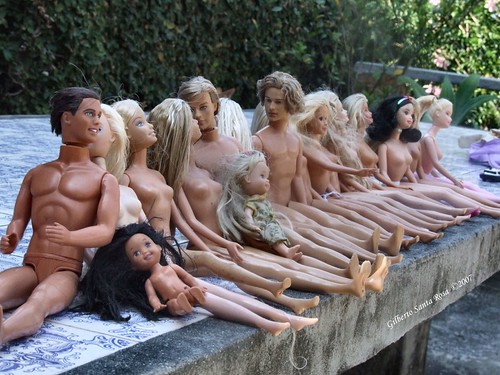
A continuing discussion with a fellow blogger on the pros and cons of going nude for Mother Nature. What are some of the challenges? What are some of the benefits?
 |
| Photo by SantaRosa OLD SKOOL |
I can't get on board with going entirely without. Partially, this is because I get cold easily, and I sunburn easily. There is only a narrow window of conditions in which I personally would be physically comfortable going naked.I agree with this sentiment whole-heartedly. I definitely stay bundled up in the winter. It would be impractical, and sometimes dangerous, to not wear clothes. If you're in Alaska, please wear clothes to stay warm. If you're in the Sahara, please wear clothes to protect you from the sun.
sanitation. We females have moist nether regions. Sitting naked on a chair that has been sat on by another naked woman is like wearing another woman's underwear. Eww eww eww eww eww. Not hygienic!Simple solution: put down a towel. This is actually a requirement at every nudist resort I've read about, precisely because they're hygiene-minded. Really, this is a side-effect of an industrial society that we can't avoid. In nature, the things we would have sat on wouldn't have been so permanent. They would have been bombarded by sun and rain and animals, and sitting in the same place more than once would have been highly unlikely. But, our chairs are made of wood and plastic and other materials that will often outlive us. Not only do they last a long time, but they're also porous and hold bacteria and other nasties. (If you've ever looked into having wooden earrings, as I have, then you know that it's recommended that you wear stainless steel until your ear is completely healed up, as wood is porous and can hold bacteria that will cause your ears to get infected). Living communally is a recipe for spreading disease, so putting down a towel where you're sitting would be a necessary step. (This is also related to my disgust with bathrooms--in our pre-civilized state, there's not way you would have found so many humans going to the bathroom in the exact same spot. When you think about it, it's gross and a breeding ground for disease. So much for being civilized...)
Having a toddler, I find that going shirtless is dangerous, because the curious little monkey likes to grab things - such as my nipples. Ow. I don't know how I would be able to wean him without shirt, either.
Speaking of nipples, I am not large-breasted, but even still, I need support. Bouncing flesh hurts.All of these are very real concerns. I definitely don't go out into a patch of blackberry briers without a pair of jeans to protect my legs. It would ultimately be more costly to get my legs all cut up, and could very well lead to infection. If we're in pain, we're less likely to be productive. And it's just plain not fun. There's no reason we should submit to that thing when we could have it otherwise (unless we really like that kind of thing).
I propose, instead, going with minimal clothes in the closet, minimal clothes on the body, minimal washing, and maximum clothes use. Most of my son's clothes, for example, come from yard sales. My own pants are worn between washings until they are stained or smelly, and they aren't retired until the knees tear open. And I rarely dress up, so my hoard of clothes is small.I love yard sales and thrift stores. Why have something manufactured when somebody already has one that they don't need? For the clothes that a person does need to protect them from the elements, etc., I can't recommend enough going this route to purchase them. Also, instead of purchasing secondhand clothes, you could participate in a clothing swap--a group of people drops off wearable clothes that they don't want or need, and then people take anything they want. Anything left is donated to a homeless shelter or other such organization. I got a very comfy jacket this way, and got rid of some old shirts from my "black phase."
 A similar claim could probably be made about washing machines. Even if the manufacturing process doesn't create more pollution, it's likely that it produces a very significant amount.
 , where my generation may have a lower life-expectancy than my parents', where sea-levels are rising and islands are being consumed, and where people are forced to stay inside to protect themselves from man-made smog.
 Not to mention that I watched The Tribe
 a few days ago. Certainly it was far from a perfect situation, but I connected with the situation: a modern group of people all depending on each other for their survival while living largely independent of the larger social structures.. We'd be getting back to our heritage as wholly as is possible in this broken landscape.

 One of the things I like about Stuff: The Secret Lives of Everyday Things, is how well it breaks down each item it focuses on. A t-shirt starts out as a huge diamond drill bit, powered by an ungodly amount of diesel fuel, drilling for yet more oil on account of our energy hungry society. Why the oil? Two of the products from the highly-polluting oil refining process go on to be polyester. That polyester is coupled with cotton from highly fertilized fields. The fields are also heavily sprayed with pesticides and herbicides to eliminate any competition the cotton might have. Finally, right before the cotton is harvested, the plants are all sprayed with a defoliant to get rid of the leaves which would stain the cotton balls in the mechanical picking process. Up to half of these chemicals end up in local streams during application and even more end up there when heavy rains or irrigation leach them from the soil.
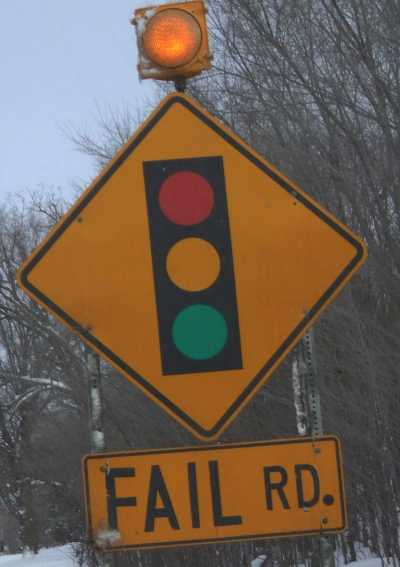
Okay, so apparently people couldn't comment while the system comments were screwed up. The site isn't going to be very usable for a few hours or so. I'm starting back at square one and adding things one at the time and making sure they're in perfect working condition. Sorry for how sporadic things are going to be... and the fact that the look of the blog will probably be changing yet again... but after that, things should be pretty stable, as I don't have plans for any major renovations as soon as I get all of the current features working properly.
 |
| Photo by Dagny Scott |
I'm pretty sure I have an Amazon gift certificate coming. If that is the case, I think I'm going to spend it on books. I've already got three in mind, two of which I've read, and one of which I haven't. I'm going to keep the list of books a secret for now... it'll be more exciting that way.
 |
| Photo by flyzipper |
All whining aside, the reason I posted that lovely array of wild plants the other day is two-fold. First, wild plants thrive and reproduce without human intervention, which makes them great for a no-maintenance food forest. Second, native species thrive in the climactic patterns of the areas where they are growing (in my case, wet winters and springs followed by drought in the summer).
 Well, the other day I overheard a comment about the work that Trackers NW is doing. They have seasonal and year-long classes on hunting, tracking, trapping, permaculture, wild plant identification, blacksmithing, and other "old time" skills. It's more than I can afford, to be sure (although I just found single day, single skill classes on the PDX site that are under $50.) But, I got excited when I found out that they offered free days. They're about once a month, and you have to make a reservation, but you get to check out Trackers NW for free, which goes to say something about their confidence in their service.
 by "Wildman" Steve Brill (who also happens to have a pretty informative website) and The Encyclopedia of Medicinal Plants (which is quite extensive in both scope and breadth). There was also a good one on poisonous plants which was especially good, but I can't remember for the life of me which it was. Possibly Poisonous Plants of the United States
 by Walter Conrad Muenscher, but that's only a guess based on the books on poisonous plants offered by the university library. The other possibility is Toxic Plants and Other Natural Toxicants
 . In any case, it would be a good idea to get some book on poisonous plants since, in reality, it's more important to know what will kill you than it is to know what is good eats, as then you'll at least not die even if you do stumble across something less than palatable.